



Eco-Friendly Tissue Paper Packaging
Sustainable Tissue Paper for Wrapping, Unboxing & Light Surface Protection
Make your shipping choices sustainable down to the smallest detail.
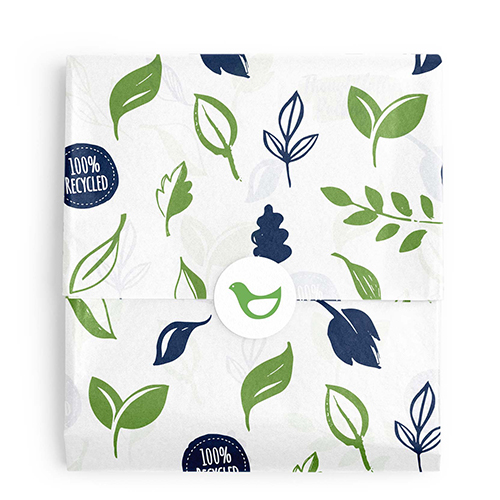
EcoEnclose tissue paper is a thin, lightweight, and soft paper designed to protect product surfaces from scuffs, elevate presentation, and reduce environmental impact. Made from 100 percent recycled paper fibers, it adds a refined layer to your packaging without plastic, coatings, or unnecessary waste.
Whether you are wrapping apparel, lining retail boxes, or creating a premium unboxing moment, tissue paper provides gentle cushioning, visual polish, and a tactile experience customers notice.
Make your shipping choices sustainable down to the smallest detail.
EcoEnclose tissue paper is a thin, lightweight, and soft paper designed to protect product surfaces from scuffs, elevate presentation, and reduce environmental impact. Made from 100 percent recycled paper fibers, it adds a refined layer to your packaging without plastic, coatings, or unnecessary waste.
Whether you are wrapping apparel, lining retail boxes, or creating a premium unboxing moment, tissue paper provides gentle cushioning, visual polish, and a tactile experience customers notice.
Key Product Features

FSC® Certified
Made with FSC® certified recycled paper fiber.
PCW Content
Made with 20% post-consumer waste that has been diverted from landfills.
Plastic-Free
Paper fibers do not contain added synthetic polymers.
Curbside Recyclable
Recyclable for the facilities that ask you to recycle rather than compost tissue paper.

Compostable
Compostable for the facilities that ask you to compost rather than recycle tissue paper.
Made in USA
Utilizes local recycled inputs, transparent supply chain, lower transportation footprint.
Looking for Custom Printed Tissue Paper?
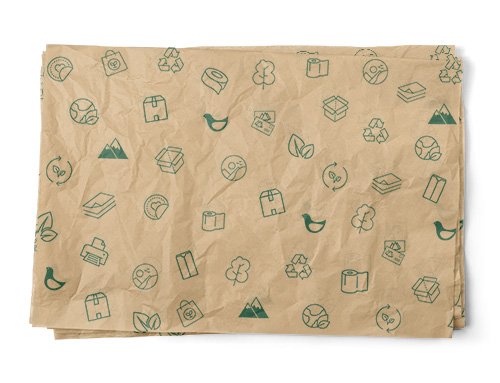
Choose from custom Kraft tissue paper or custom white tissue paper to add your logo, pattern, or messaging to your packaging. Explore our custom tissue paper to create a branded unboxing experience that feels thoughtful without overpowering your product.EcoEnclose custom tissue paper is printed with low coverage, water-based or Algae Ink, and designed to remain recyclable at end of life. Whether you prefer the natural look of Kraft or the clean backdrop of white tissue paper, both options help you bring your brand into the unboxing experience while supporting your sustainability goals.
Shop Custom Tissue Paper
Use 1,000+ packaging units each week? Design completely customized tissue paper tailored to your brand.
Request High-Volume Quote
Start Your Order
Frequently Asked Questions
What makes tissue paper eco-friendly?
"Eco-friendly" gets thrown around a lot. We think tissue paper should have to earn it. At EcoEnclose, we evaluate tissue using our Sustainable Packaging Framework, focusing on the materials, recyclability, and manufacturing practices that shape real environmental impact.
Here's what we prioritize, and where our tissue stands on each.
100% recycled content. Look for tissue made with 100% recycled paper fibers and as much post-consumer waste (PCW) as possible. Recycled content uses less energy and water and creates less pollution than virgin paper, and buying it is what keeps recycling viable in the first place.
EcoEnclose tissue is made with 100% recycled paper fibers, including 20% post-consumer waste.
Recyclable at end-of-life. Recycling keeps raw materials in use and out of the landfill. Tissue is recyclable where facilities accept it, and compostable for the small group of waste providers that ask you to compost instead. Either way, it needs to be free of glitter, foil, and other non-paper additions to keep those streams clean.
EcoEnclose tissue is free of all plastic, foil, glitter, and other additives that contaminate recyclers and composters.
Processed chlorine-free (PCF). Until about 30 years ago, paper mills bleached pulp with elemental chlorine, which reacted with lignin to produce dioxin (a carcinogen) in wastewater. The EPA forced a phase-out, and most mills now use chlorine dioxide, which produces fewer dioxins but still isn't chlorine-free. No US mill has eliminated chlorine from virgin paper bleaching. "ECF" (elemental chlorine-free) applies to virgin paper. "PCF" applies to recycled paper and uses peroxide, oxygen, or ozone - no chlorine at all.
EcoEnclose tissue is 100% recycled and PCF: bleached with an oxygen-based system, no chlorine involved.
Minimal ink, better ink. Look for low ink coverage and water- or soy-based inks. Heavy coverage or fully dyed sheets bring pigment contamination into recycling and compost. And skip digitally printed tissue - it's often printed with toner that contains plastics.
EcoEnclose tissue is printed with water-based or Algae Ink at low coverage to keep recycling and compost streams clean.
A supply chain you can actually see. Tissue is often produced overseas in facilities with little transparency into labor conditions or environmental practices. Because production is water- and heat-intensive, that visibility matters.
EcoEnclose tissue is made in the USA, in a facility we've visited ourselves.
Here's what we prioritize, and where our tissue stands on each.
100% recycled content. Look for tissue made with 100% recycled paper fibers and as much post-consumer waste (PCW) as possible. Recycled content uses less energy and water and creates less pollution than virgin paper, and buying it is what keeps recycling viable in the first place.
EcoEnclose tissue is made with 100% recycled paper fibers, including 20% post-consumer waste.
Recyclable at end-of-life. Recycling keeps raw materials in use and out of the landfill. Tissue is recyclable where facilities accept it, and compostable for the small group of waste providers that ask you to compost instead. Either way, it needs to be free of glitter, foil, and other non-paper additions to keep those streams clean.
EcoEnclose tissue is free of all plastic, foil, glitter, and other additives that contaminate recyclers and composters.
Processed chlorine-free (PCF). Until about 30 years ago, paper mills bleached pulp with elemental chlorine, which reacted with lignin to produce dioxin (a carcinogen) in wastewater. The EPA forced a phase-out, and most mills now use chlorine dioxide, which produces fewer dioxins but still isn't chlorine-free. No US mill has eliminated chlorine from virgin paper bleaching. "ECF" (elemental chlorine-free) applies to virgin paper. "PCF" applies to recycled paper and uses peroxide, oxygen, or ozone - no chlorine at all.
EcoEnclose tissue is 100% recycled and PCF: bleached with an oxygen-based system, no chlorine involved.
Minimal ink, better ink. Look for low ink coverage and water- or soy-based inks. Heavy coverage or fully dyed sheets bring pigment contamination into recycling and compost. And skip digitally printed tissue - it's often printed with toner that contains plastics.
EcoEnclose tissue is printed with water-based or Algae Ink at low coverage to keep recycling and compost streams clean.
A supply chain you can actually see. Tissue is often produced overseas in facilities with little transparency into labor conditions or environmental practices. Because production is water- and heat-intensive, that visibility matters.
EcoEnclose tissue is made in the USA, in a facility we've visited ourselves.
When should I use tissue paper in my packaging?
There are many ways to use tissue in your shipments! For non-fragile items that need dust protection and packaging pizazz, here are some use case ideas to get you started:
It is critical to note that tissue is not a damage protection solution. It would be best if you used it for decorative purposes, dust protection, and scuff protection. It does not serve as a void fill or dunnage and won’t protect fragile items from breaking. If you are looking to fill spaces in your box or protect fragile items, explore our other eco-friendly protective packaging solutions.
- Wrap items in tissue paper sheets, including books, prints, apparel, accessories, and jewelry.
- Create a decorative “nest” out of tissue in a box to lay your products on.
- Fold tissue over your prints and photos.
- Use gift tissue paper to bring a decorative touch to retail and gift bags.
It is critical to note that tissue is not a damage protection solution. It would be best if you used it for decorative purposes, dust protection, and scuff protection. It does not serve as a void fill or dunnage and won’t protect fragile items from breaking. If you are looking to fill spaces in your box or protect fragile items, explore our other eco-friendly protective packaging solutions.
Should I recycle or compost my tissue paper?
Most tissue on the market (including ours) is labeled as recyclable. We are very transparent that the end-of-life of tissue, unlike other paper-based packaging, depends mainly on the rules of a person’s local recyclers. However, for a municipality or waste management provider to accept an item for recycling, the provider must have the infrastructure to sort the material and profitable markets to sell to.
Tissue is relatively low grade and isn’t always easy for recyclers to find buyers willing to pay for it. Additionally, it is difficult for recyclers to sort without the correct machinery. Because of this, some recyclers don’t accept it (even if it is labeled as recyclable), and some of these operations ask that you compost it instead - if your municipality has a composting service that can accept it.
Tissue is relatively low grade and isn’t always easy for recyclers to find buyers willing to pay for it. Additionally, it is difficult for recyclers to sort without the correct machinery. Because of this, some recyclers don’t accept it (even if it is labeled as recyclable), and some of these operations ask that you compost it instead - if your municipality has a composting service that can accept it.
Is eco-friendly tissue paper strong enough for shipping?
Yes, for light surface protection. Tissue paper can help protect products from scuffs and abrasion, but it is not a substitute for protective void fill or cushioning for fragile items. For heavier or breakable products, pair tissue paper with appropriate protective packaging.
Does printed tissue paper affect recyclability?
It can. That's why we're picky about how ours is printed.
Low-coverage, water-based or algae-based inks stay compatible with paper recycling streams. Heavy ink coverage and plastic-based inks can interfere, so we limit both ink density and ink type.
It's also why we've skipped two popular options:
No digital printing (for now). Digitally printed tissue offers lower minimum order quantities, but it's typically printed with toner ink, which contains polymers - tiny plastic particles that bond to the paper. That's manageable in recycling at low coverage, but we hate the thought of it getting composted and ending up in our soils.
No solid colors. Colored tissue looks lovely in a gift bag, but that much pigment is a challenge for paper repulpers and brings contamination into compost. So we offer white and kraft only.
Bottom line: our tissue is designed to be recycled or composted cleanly, not just to look good.
Low-coverage, water-based or algae-based inks stay compatible with paper recycling streams. Heavy ink coverage and plastic-based inks can interfere, so we limit both ink density and ink type.
It's also why we've skipped two popular options:
No digital printing (for now). Digitally printed tissue offers lower minimum order quantities, but it's typically printed with toner ink, which contains polymers - tiny plastic particles that bond to the paper. That's manageable in recycling at low coverage, but we hate the thought of it getting composted and ending up in our soils.
No solid colors. Colored tissue looks lovely in a gift bag, but that much pigment is a challenge for paper repulpers and brings contamination into compost. So we offer white and kraft only.
Bottom line: our tissue is designed to be recycled or composted cleanly, not just to look good.
What packaging pairs best with tissue paper?
Tissue paper pairs well with a variety of paper-based packaging formats, including Paper Bags, Retail Boxes, and Glassine Bags.
Is EcoEnclose tissue paper FSC® Certified?
We carry FSC® certification (FSC® MIX, SCS-COC-009926) for our tissue paper, which comes from 100% recycled inputs. By choosing FSC® certified products, you support responsible management of the world’s forests.
Some companies focus on FSC® certification. While we agree that FSC® certified paper is far better than virgin paper from unknown sources, focusing on 100% recycled paper from an environmental standpoint is much better. FSC® certified paper can come directly from a tree (potentially from ancient and endangered forests) whose stored carbon is released into the environment when cut down.
Some companies focus on FSC® certification. While we agree that FSC® certified paper is far better than virgin paper from unknown sources, focusing on 100% recycled paper from an environmental standpoint is much better. FSC® certified paper can come directly from a tree (potentially from ancient and endangered forests) whose stored carbon is released into the environment when cut down.
Is EcoEnclose tissue paper FDA-Compliant?
No - our tissue paper is not FDA-Compliant or FDA-Approved.